Logan Lee
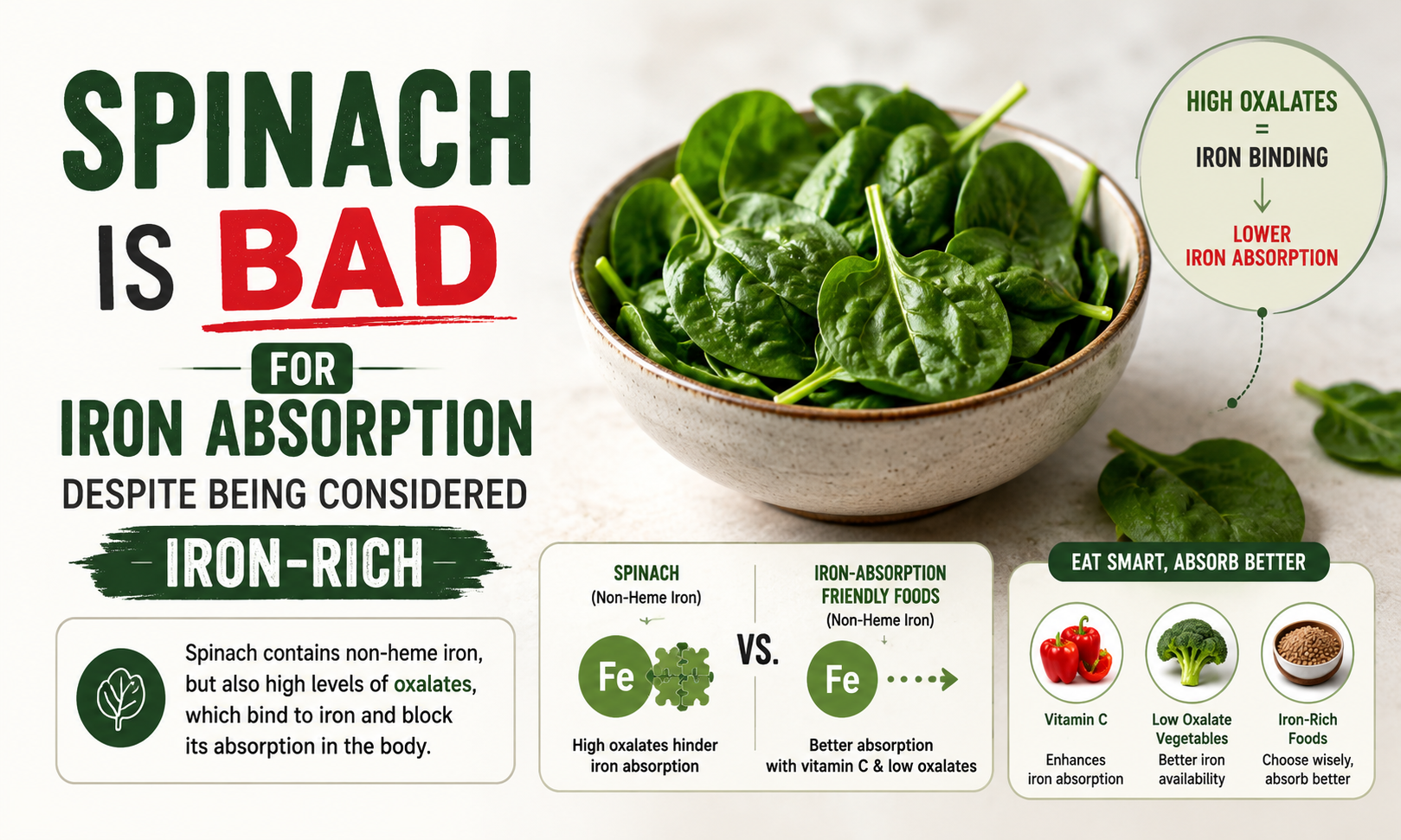
Spinach is often celebrated as one of the healthiest vegetables in the world. Packed with vitamins, minerals, antioxidants, and fiber, it has earned a reputation as a nutritional powerhouse. Among its many claimed benefits, spinach is commonly associated with iron. Many people believe that eating spinach is one of the best ways to increase iron intake and prevent iron deficiency. However, nutrition science reveals a more complicated reality. Understanding why spinach is bad for iron absorption can help people make informed dietary choices and avoid common misconceptions about this popular leafy green.
Although spinach contains iron, the body may not absorb as much of it as many people assume. This distinction between iron content and iron absorption is essential for understanding spinach’s true role in a healthy diet.
The Reputation of Spinach as an Iron-Rich Food
For decades, spinach has been marketed as a food rich in iron. This belief became deeply rooted in popular culture and nutrition advice. Since iron is an essential mineral involved in oxygen transport, energy production, and overall health, foods containing iron are often highly valued.
When people look at nutritional information, spinach appears to contain a reasonable amount of iron per serving. Because of this, it is frequently recommended to vegetarians, vegans, and individuals seeking plant-based sources of iron.
However, the presence of iron in food does not automatically mean that the body can absorb and use it efficiently. This is the key reason why discussions about why spinach is bad for iron absorption continue among nutrition experts.
Iron Content vs. Iron Bioavailability
One of the most important concepts in nutrition is bioavailability. Bioavailability refers to the percentage of a nutrient that the body can absorb and utilize.
There are two main forms of dietary iron:
- Heme iron
- Non-heme iron
Heme iron is found in animal-based foods such as beef, poultry, and fish. The body absorbs heme iron very efficiently.
Non-heme iron is found in plant foods, including spinach. While non-heme iron contributes to overall iron intake, it is generally absorbed less effectively. Various compounds in foods can either improve or reduce its absorption.
This difference helps explain why spinach may not be the ideal iron source many people believe it to be.
The Problem With Oxalates
The primary answer to why spinach is bad for iron absorption lies in its high oxalate content.
Oxalates are naturally occurring compounds found in many vegetables, fruits, nuts, and seeds. Spinach contains particularly high levels of these compounds. When oxalates enter the digestive system, they can bind with minerals such as iron and calcium.
Once oxalates bind with iron, the resulting compound becomes difficult for the body to absorb. As a result, much of the iron present in spinach may pass through the digestive tract without being utilized.
This means that while spinach technically contains iron, the body may absorb only a small portion of it.
Why Iron Absorption Matters
Iron deficiency remains one of the most common nutritional deficiencies worldwide. Symptoms can include fatigue, weakness, poor concentration, dizziness, and reduced immune function.
Because of these concerns, many individuals intentionally increase their iron intake through diet. However, focusing solely on foods with high iron content can sometimes be misleading.
The body benefits more from foods that provide absorbable iron rather than foods that simply contain iron on paper. This is another reason why understanding why spinach is bad for iron absorption is so important for anyone trying to improve their iron status.
The Myth That Spinach Solves Iron Deficiency
A common myth is that eating large amounts of spinach can quickly correct iron deficiency. While spinach can contribute some iron to the diet, relying on it as a primary iron source may not be effective.
People with low iron levels often require foods with higher iron bioavailability. In some cases, dietary supplements or medical treatment may also be necessary.
Spinach alone is unlikely to provide enough absorbable iron to significantly improve severe iron deficiency. This does not make spinach unhealthy; it simply means that its role in iron nutrition is often overstated.
Cooking and Iron Availability
Many people wonder whether cooking spinach changes its effect on iron absorption. Cooking can reduce some of the oxalate content found in spinach. Methods such as boiling, steaming, and sautéing may help lower oxalate levels to some extent.
As oxalate levels decrease, mineral availability may improve slightly. However, cooking does not completely eliminate oxalates. Even cooked spinach still contains enough oxalates to affect iron absorption.
Therefore, while cooking can make spinach somewhat more nutritionally accessible, it does not transform spinach into a highly absorbable iron source.
How Vitamin C Can Help
One effective way to improve iron absorption from plant foods is by combining them with vitamin C-rich foods.
Vitamin C helps convert non-heme iron into a form that is easier for the body to absorb. This can partially offset some of the absorption challenges associated with plant-based iron sources.
Good sources of vitamin C include:
- Oranges
- Lemons
- Strawberries
- Bell peppers
- Tomatoes
- Broccoli
Adding these foods to spinach-based meals can improve the overall absorption of iron and other nutrients.
Better Sources of Dietary Iron
Individuals concerned about iron intake should consider a variety of iron-rich foods rather than depending entirely on spinach.
Some effective plant-based sources include:
- Lentils
- Chickpeas
- Black beans
- Kidney beans
- Tofu
- Pumpkin seeds
- Quinoa
- Fortified cereals
Animal-based sources often provide even more absorbable iron, including:
- Lean beef
- Chicken
- Turkey
- Fish
- Shellfish
Including a range of these foods can support healthier iron levels and improve overall nutrition.
Spinach Still Deserves a Place in Your Diet
Learning why spinach is bad for iron absorption should not discourage people from eating spinach. The vegetable remains incredibly nutritious and offers numerous health benefits.
Spinach is rich in:
- Vitamin A
- Vitamin K
- Folate
- Magnesium
- Potassium
- Antioxidants
- Fiber
These nutrients support eye health, bone strength, immune function, digestive health, and cardiovascular wellness. Spinach can still be a valuable part of a balanced diet even if it is not the best source of absorbable iron.
The Bottom Line
The idea that spinach is an exceptional iron source has persisted for generations, but modern nutrition research tells a more detailed story. Although spinach contains iron, its high concentration of oxalates significantly limits how much of that iron the body can absorb.
Understanding why spinach is bad for iron absorption helps separate nutritional myths from scientific facts. Spinach remains one of the healthiest vegetables available, but it should not be relied upon as the primary solution for improving iron levels.
For optimal iron intake, individuals should combine spinach with vitamin C-rich foods and include a variety of iron-rich sources in their diets. By focusing on both iron content and iron absorption, it becomes easier to maintain healthy iron levels while still enjoying the many benefits that spinach has to offer.


 Stephen Scott