Stephen Scott
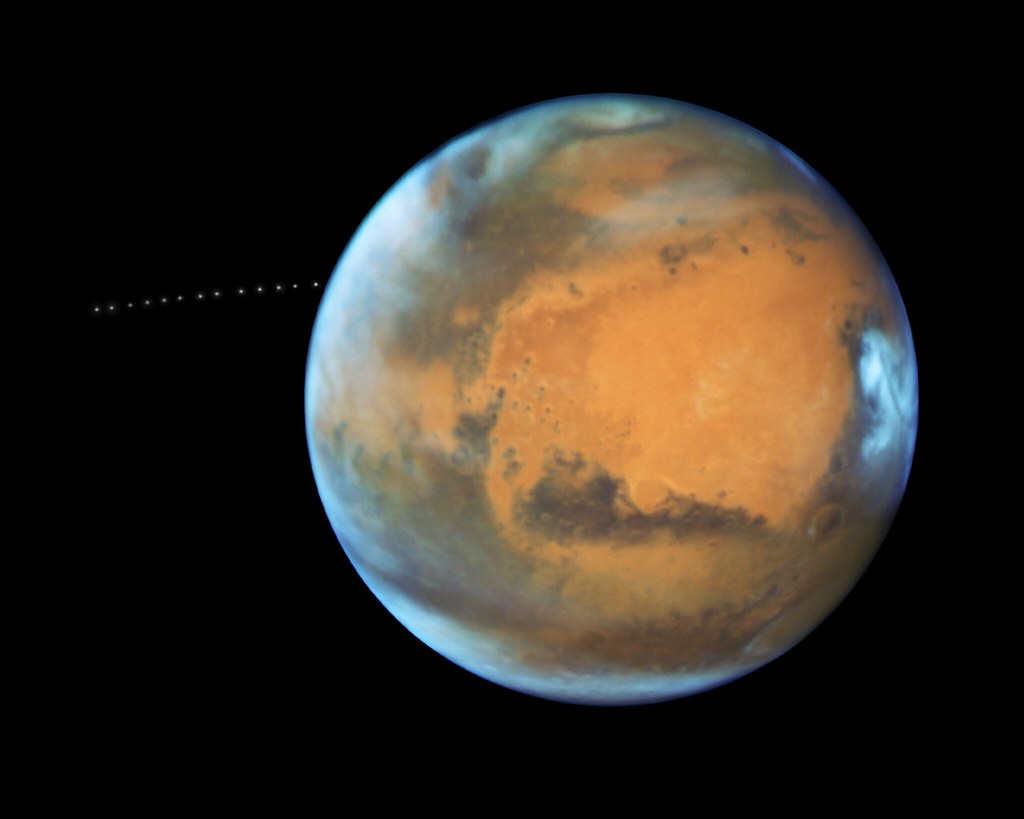
The Martian moon Phobos mission aims to bring home a piece of the Martian moon Phobos, highlighting Japan’s commitment to space exploration and scientific advancement.
Overview of the Phobos Mission
The recent launch of a mission aimed at Mars’ moon Phobos marks a significant milestone in space exploration. This endeavor, led by Japan, seeks to collect samples from the surface of Phobos and return them to Earth. It is the first mission specifically targeting the Martian moon, underscoring the growing interest in understanding its composition and the broader implications for planetary science.
Phobos, the larger of Mars’ two moons, has long fascinated scientists due to its unique features, including its irregular shape and the presence of craters. The mission aims to unravel the mysteries surrounding its origin, which may be linked to the early solar system.
Key components of the Martian moon Phobos mission include:
- Sample Collection: Advanced technology will be employed to gather soil and rock samples from Phobos’ surface.
- Return to Earth: The mission plans to bring these samples back for detailed analysis, potentially revealing insights into planetary formation.
- International Collaboration: This mission involves partnerships with various space agencies, fostering global cooperation in space exploration.
As scientists prepare for this groundbreaking mission, the anticipation surrounding the potential findings continues to grow. The Martian moon Phobos mission could significantly enhance our understanding of the solar system’s history and the processes that shaped it.
Japan’s Space Agency Goals
Japan’s space agency, JAXA, has set ambitious goals for its Martian moon Phobos mission, aiming to gather significant scientific data and samples that could deepen our understanding of the Martian system. The mission, which involves a spacecraft landing on Phobos, is part of a broader effort to explore not only the moon itself but also the potential for future human exploration of Mars.
Key goals of the mission include:
- Sample Collection: JAXA plans to collect soil and rock samples from the surface of Phobos. This material may contain clues about the history of Mars and the solar system.
- Analyzing Phobos’ Composition: Understanding the chemical makeup of Phobos will help determine whether it is a captured asteroid or a remnant from Mars’ formation.
- Investigating the Moon’s Environment: The mission will assess the radiation levels and other environmental factors on Phobos, which could inform future missions to Mars.
- Testing New Technologies: JAXA aims to develop and refine technologies that will be essential for future lunar and Martian explorations.
Through these objectives, the Martian moon Phobos mission not only seeks to unveil the mysteries of Phobos but also paves the way for human exploration of Mars in the coming decades.
Importance of Martian Samples
The importance of retrieving samples from the Martian moon Phobos cannot be overstated. These samples hold the potential to unlock secrets about the formation and evolution of both Phobos and Mars itself. By studying these materials, scientists can gain insights into the early solar system and the processes that shaped planetary bodies.
One of the primary goals of the Martian moon Phobos mission is to understand the moon’s composition. This can provide clues about the history of water on Mars and its potential for supporting life, both past and present. Additionally, by analyzing Phobos’ surface, researchers can learn more about the impact events that shaped its landscape, which may mirror the impact history of Earth.
Moreover, these samples could also enhance our understanding of cosmic radiation and its effects on planetary bodies. As Phobos orbits close to Mars, it experiences different environmental conditions compared to Earth, making it a valuable subject for study.
As the mission progresses, the collaboration among international space agencies highlights the significance of a unified approach to space exploration. In summary, the samples collected during the Martian moon Phobos mission will provide a wealth of information that could be pivotal for future exploration and understanding of our solar system.
Challenges in Space Exploration
Space exploration is fraught with challenges, and the Martian moon Phobos mission is no exception. As Japan’s space agency embarks on this ambitious journey, it faces several hurdles that could impact the success of retrieving samples from Phobos.
- Technical Difficulties: Designing spacecraft capable of landing on and taking off from the irregular surface of Phobos presents significant engineering challenges. The mission requires advanced technology to ensure navigation and stability during both phases.
- Environmental Factors: The harsh conditions of space, including extreme temperatures and radiation, pose risks to the spacecraft’s instruments and systems. Developing resilient technologies that can withstand these elements is essential.
- Sample Collection: Successfully collecting samples from the Martian moon Phobos is a complex process. Scientists must ensure that the samples are uncontaminated and representative of the moon’s surface.
- Return Journey: The mission’s success hinges not only on reaching Phobos but also on safely returning the samples to Earth. This requires precise planning and execution to navigate the complexities of re-entry and landing.
- Funding and Resources: Space missions are expensive, and securing consistent funding can be a persistent challenge. Effective management of resources is vital to maintain momentum and progress.
Despite these challenges, the Martian moon Phobos mission remains a critical step towards enhancing our understanding of Mars and its moons.
Technological Innovations
The Martian moon Phobos mission is set to benefit from groundbreaking technological innovations that aim to enhance the success rate of space exploration. These advancements are crucial for the collection and return of samples from Phobos, offering insights into the moon’s composition and the history of Mars.
One of the key innovations is the development of advanced robotic systems designed for precision sampling. These robots will be equipped with state-of-the-art tools that allow them to extract materials while minimizing contamination. This is vital for ensuring that the samples returned to Earth are as pure and informative as possible.
Furthermore, the mission will utilize cutting-edge communication technology, enabling real-time data transmission between the spacecraft and mission control. This will facilitate immediate decision-making and adjustments during the mission, increasing the chances of success.
Another significant aspect of this technological leap is the implementation of improved navigation systems. These systems will help the spacecraft maneuver accurately in the complex gravitational environment of Mars and its moons, ensuring that the mission can achieve its objectives efficiently.
Lastly, advancements in propulsion technology will allow for a more efficient journey to and from Phobos. By optimizing fuel consumption and travel time, the mission can allocate more resources toward scientific research and sample analysis.
International Collaboration in Space
International collaboration has become a cornerstone in the success of the Martian moon Phobos mission. As nations around the world recognize the importance of shared knowledge and resources in space exploration, partnerships are increasingly essential for achieving ambitious objectives. The Phobos mission exemplifies this trend, as multiple space agencies work together to unravel the mysteries of Mars and its moons.
Key players in this collaborative effort include:
- Japan’s Aerospace Exploration Agency (JAXA) – Leading the mission with innovative technology and a commitment to advancing planetary science.
- NASA – Providing expertise in sample collection and planetary surface operations, as well as potential launch support.
- European Space Agency (ESA) – Contributing scientific knowledge and instruments to analyze samples collected from Phobos.
This international coalition not only enhances the mission’s scientific potential but also fosters a spirit of unity in the pursuit of knowledge. By pooling resources, sharing data, and promoting joint research, the participating agencies aim to maximize the impact of the Martian moon Phobos mission on our understanding of the solar system.
As the mission progresses, the collaborative framework established by these space agencies will serve as a model for future endeavors, paving the way for even more ambitious projects in the realm of space exploration.
Future of Mars Exploration
The future of Mars exploration is poised for significant advancements, particularly with the upcoming Martian moon Phobos mission. As space agencies and private entities continue to invest in Martian research, the focus is shifting toward sustainable exploration and the establishment of human presence on the planet.
One of the primary objectives of future missions is to build on the discoveries made by robotic missions. These robotic explorers have laid the groundwork for our understanding of Mars, yet the next phase will involve human involvement. This human factor is expected to enhance our capabilities in conducting more complex experiments and gathering detailed data directly from the Martian surface.
In addition to human exploration, the extraction and analysis of Martian samples will play a critical role in our understanding of the planet’s geology and potential for life. The ongoing Phobos mission, seeking to return samples from the Martian moon, will serve as a crucial stepping stone in this process.
Moreover, international collaboration is set to become more pronounced, with various nations pooling resources and expertise to tackle the challenges of Mars exploration. This united approach not only maximizes the potential for success but also fosters a spirit of cooperation in the quest to unlock the mysteries of Mars and its moons.
- Enhanced robotic missions
- Human presence on Mars
- Martian sample analysis
- International collaboration
The Martian moon Phobos mission aims to unlock the mysteries of this intriguing celestial body. By following the best proven steps to success, scientists hope to gather valuable data that could inform future explorations of Mars.
By NASA Goddard Photo and Video via Openverse